
The short answer
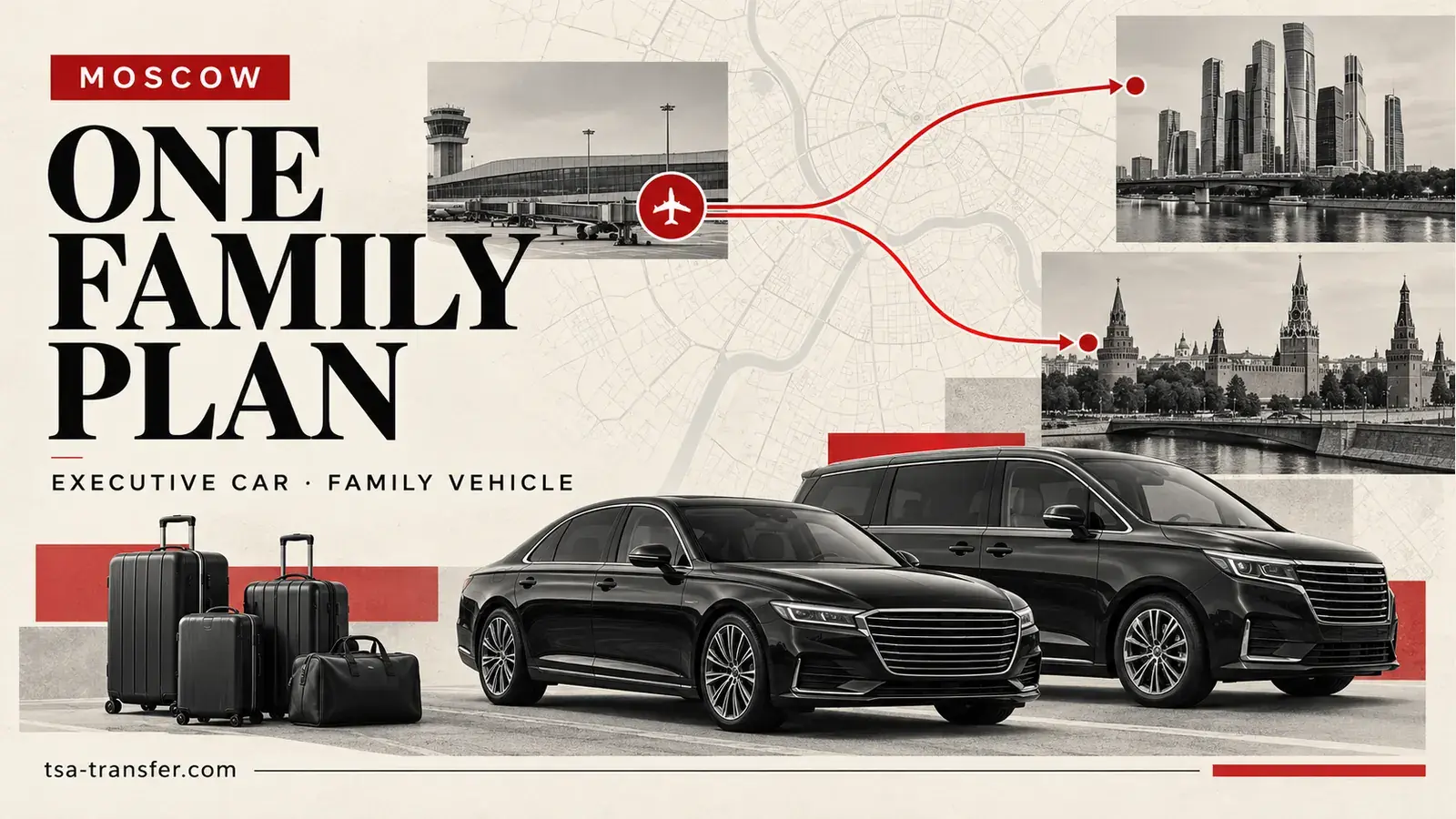
Plan every movement separately. Count the passengers, occupied child-restraint positions and luggage for the airport arrival, meeting day, family programme and departure. Then assign vehicles by the busiest section and keep all schedules in one master itinerary.
The principal can have a dedicated car while family members and luggage use a larger vehicle. One coordinator should still see both plans and approve changes.
Build a movement matrix
List every section of the trip rather than one total passenger number.
| Movement | Passengers | Luggage | Fixed requirement | Vehicle status |
|---|---|---|---|---|
| Airport to hotel | everyone arriving together | all arrival luggage | child restraint if required | confirm capacity |
| Hotel to executive meeting | principal and assistant | small personal items | discreet direct route | dedicated car |
| Family day | family members and assistant | stroller or shopping space if provided | flexible stops | separate vehicle |
| Evening event | confirmed attendees | limited luggage | required arrival time | final assignment |
| Departure | travellers on each flight | departure luggage | terminal and check-in plan | confirm again |
The table should use actual numbers. Avoid descriptions such as “family car” or “large vehicle” without passenger and luggage details.
Airport arrival: seats and luggage compete for space
A vehicle may have enough passenger seats and still be unsuitable for the luggage. Child restraints can also change usable seating. Ask for:
- adults and children travelling on the section;
- each child's age, weight and height when a restraint is required;
- number of large and cabin cases;
- stroller, wheelchair or oversized items;
- passengers continuing directly to a meeting;
- hotel and terminal;
- separate arrival or departure flights.
The vehicle assignment should be confirmed against the actual model. Published generic capacity figures cannot replace this check.
Child restraints in Russia
Russian Traffic Rules require children under 7 to use a child-restraint system suitable for their weight and height in a passenger car equipped with seat belts.
For children aged 7 to 11 inclusive, the rear seat may use a suitable restraint or the vehicle's seat belt. A suitable child-restraint system is required on the front seat. The restraint must be installed and used according to its instructions.
For transport planning, send the child's age, weight and height in advance. State whether the child will travel on every movement or only selected sections. The final restraint and seating plan must be confirmed before service.
Keep the executive and family schedules separate
The executive plan usually contains fixed arrival times, offices and events. The family plan may contain provisional stops and a different end point. Combining both into one vehicle can create a conflict later in the day.
Use separate lines for:
- Principal and business companions.
- Family members travelling together.
- Assistants, interpreters or security professionals.
- Luggage-only support if the organiser requests it.
This does not mean every group needs a dedicated car all day. It means the organiser can see where schedules overlap and where they separate.
Choose vehicle capacity by section
An executive sedan may suit a principal and assistant with limited luggage. A larger passenger vehicle may suit a family or group carrying several cases. Multiple vehicles may be clearer when guests follow different schedules.
Compare:
- usable passenger positions;
- occupied child-restraint positions;
- luggage space with all seats in use;
- ease of boarding for older or mobility-limited guests;
- waiting and parking conditions;
- the next assignment after drop-off.
Request a capacity and class. The booking confirmation names the model or agreed equivalent for the dates.
One master itinerary, several driver sheets
The master itinerary contains the full party. Each driver receives only the relevant movements and contacts.
The master version should show:
- guest or group name;
- pickup time and exact entrance;
- destination and required arrival time;
- assigned vehicle;
- luggage note;
- child-restraint note;
- authorised contact;
- status and last update time.
If the family plan changes, the coordinator checks whether the same vehicle can still cover the executive movement. Changing one driver's instruction alone leaves the other assignments outdated.
Privacy and communication
Record only details needed for the service. A driver needs the passenger name, route and contact method. Medical, family or business context should stay with the organiser unless it directly affects safe transport.
Ask the organiser to specify:
- preferred communication language;
- whether the driver contacts the guest or assistant;
- who approves additional stops;
- which guest names may appear on meeting signs;
- whether separate schedules should remain private from other passengers.
These are request-specific facts. They should never be inferred from nationality, title or family role.
Plan the departure again
The departure movement may need a different vehicle mix from the arrival. Shopping, documents or equipment may increase luggage. Guests may leave on different flights.
Reconfirm:
- passenger group by flight;
- terminal;
- luggage count;
- child-restraint requirement;
- hotel pickup sequence;
- required airport arrival time supplied by the traveller or airline;
- contact for a delayed guest.
Do not copy the arrival assignment without checking these fields.
Request checklist
- dates and Moscow airports;
- hotels and exact entrances;
- passenger groups for each movement;
- ages, weights and heights for required child restraints;
- luggage and special items;
- executive meetings and required arrival times;
- family movements and provisional stops;
- accessibility or privacy requirements supplied by the organiser;
- preferred vehicle capacity and class;
- one person authorised to approve changes.
Frequently asked questions
Can one vehicle carry the whole party from the airport?
Possibly. The decision requires the actual passenger count, occupied restraint positions, luggage and confirmed vehicle capacity.
Can the principal use a separate car?
Yes. The principal's schedule and family movements can use separate vehicles inside one coordinated plan.
Are child restraints available by default?
They should be requested and confirmed in advance with the child's age, weight and height. Do not assume that an unspecified restraint suits every child.
Can the vehicle change during the stay?
Yes. The itinerary can assign different classes to airport, meeting and family sections. Every change must preserve the confirmed capacity and requirements.
Request a coordinated vehicle plan
Provide the dates, flights, passenger groups, luggage, child-restraint details and separate schedules in the TSA contact form. You can also write on Telegram or to tsa-transfer@mail.ru. The Gulf executive and family travel service page shows the overall format. For a single arrival, see the Moscow airport transfer guide.